The best push traffic sources in 2026 for a CPA test are networks that publish their pricing, let you target by GEO and subscription age, and accept a test-sized deposit. Among the six networks in the table below, RichAds publishes its CPC range, EvaDav and RollerAds expose subscription-age targeting, and Galaksion and RollerAds publish a $50 minimum deposit. Pick a source by the four checks in this guide rather than by the volume on its homepage. CIPIAI runs the tech CPA offers that push traffic feeds, so we see the result of a source choice from the offer side.
Push traffic is ad inventory delivered as a device or browser notification to users who previously agreed to receive messages from a publisher, sold by ad networks to media buyers on a cost-per-click basis. The opt-in step is what separates it from popunder and native: a popunder impression rides on attention nobody granted, a native placement sits inside content the reader didn't come for ads in, and a push notification goes to someone who once clicked "Allow." That click is a thin intent signal, but it's a real one, and it's the reason push tends to clear at a lower cost per click than display formats even though the audience behind it is smaller than popunder's.
For deposit floors, GEO reach and stated volume across eleven networks, see our push ad networks comparison. If push turns out to be the wrong fit for your traffic, our traffic sources hub maps push against popunder, native, SEO and the rest.
Is Push Traffic Worth Testing in 2026?
Push traffic is worth testing for low-friction tech offers: it is cheap to enter, it produces a readable signal within days, and it brings a click the user chose to make.
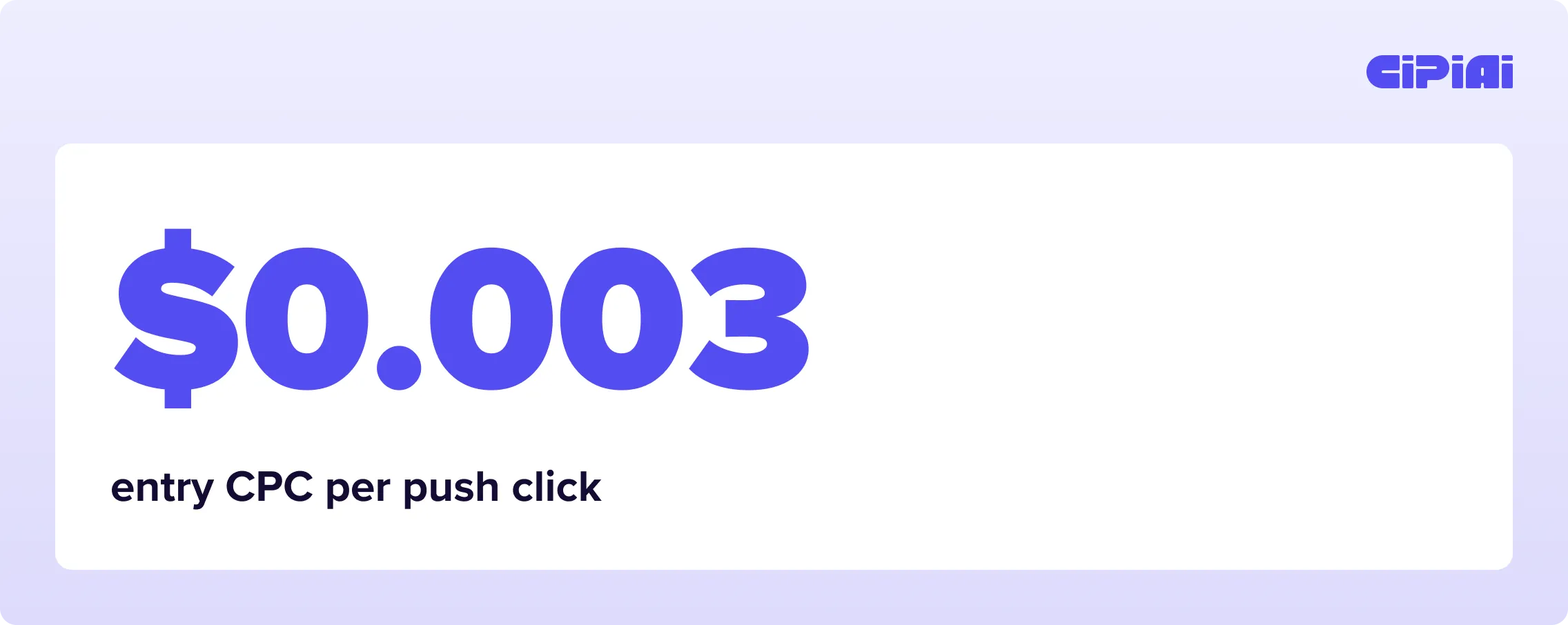
The opt-in changes the economics. A user who subscribed to notifications, even passively, behaves differently from one interrupted mid-browse. Push CPC starts at $0.003 per click and reaches $0.34 or more in premium markets, according to RichAds' push ads page (checked October 2026). That floor is low enough to run a real test without committing a month's budget to one GEO.
The format reads fast. A push campaign produces a usable signal within days, not weeks, because the inventory regenerates constantly and the creative cycle is short. You can run $50 on one GEO and know within 48–72 hours whether the offer has a pulse on that source.
It's cheaper to enter than most alternatives, and cheaper than it looks on volume alone. Push traffic doesn't compete on raw scale with popunder or native, because a push subscriber base is finite where popunder inventory effectively isn't. What it trades for that smaller ceiling is a click the user chose to make, which is why buyers who run both formats in the same vertical tend to see push convert at a noticeably higher rate per click, even paying more for that click than popunder does.
Is push traffic worth it if you already run popunder? Usually yes, as a second line rather than a replacement. Popunder still wins on raw volume and cost per thousand; push wins on the quality of the click. Running both against the same offer tells you more about where your budget is best spent than running either alone.
Push vs Popunder vs Native Traffic: Which Format Fits
Push fits one-tap tech offers where an opt-in click is worth paying a little more for; popunder wins on raw volume and price, and native suits offers that need a longer read.
Push
Popunder
Native
Requires user opt-in
Yes (classic) / no (in-page)
No
No
Where it appears
Device notification, outside the session
New window under the active tab
Inside content, styled to match the page
Typical entry CPC
Low, rises fast on Tier-1
Lowest of the three
Higher, priced more like display
Volume ceiling
Capped by subscriber base (classic) or pageviews (in-page)
High, limited mostly by publisher reach
High, but placement-dependent
Best-fit offer type
Low-friction, one-tap action
Low-friction, one-tap action
Considered purchase, longer read
Creative fatigue speed
Fast, same subscriber sees it repeatedly
Slow, no creative to fatigue, the offer page is the ad
Moderate, blends with editorial content
What's the difference between push and popunder traffic? Push requires an opt-in step (for classic subscription push; in-page push doesn't) and delivers as a notification-styled message outside or inside the browsing session. Popunder needs no opt-in and shows the full offer page in a new window under the active tab when the user closes it. Popunder carries more raw volume and a lower floor price; push carries a thinner but real intent signal and tends to convert better per click on offers that fit both formats. Our popunder guide covers that side in the same depth this page covers push.
Best Push Traffic Sources Compared
The six networks below all sell push in some form, checked against their own public advertiser pages in October 2026. This table is positioning, not a rate card: minimum deposits, GEO counts and published volume change often enough that a number printed here would be stale before the page updates. For deposit floors, GEO reach and stated volume across eleven push-selling networks, see Best Push Ad Networks in 2026.
A multi-format network that sells in-page push as its replacement for classic push, next to popunder, Social Bar and native
In-page only (no opt-in)
You’re already buying other formats there and want push-style inventory on the same balance
How to Evaluate a Push Traffic Source Before You Commit Budget
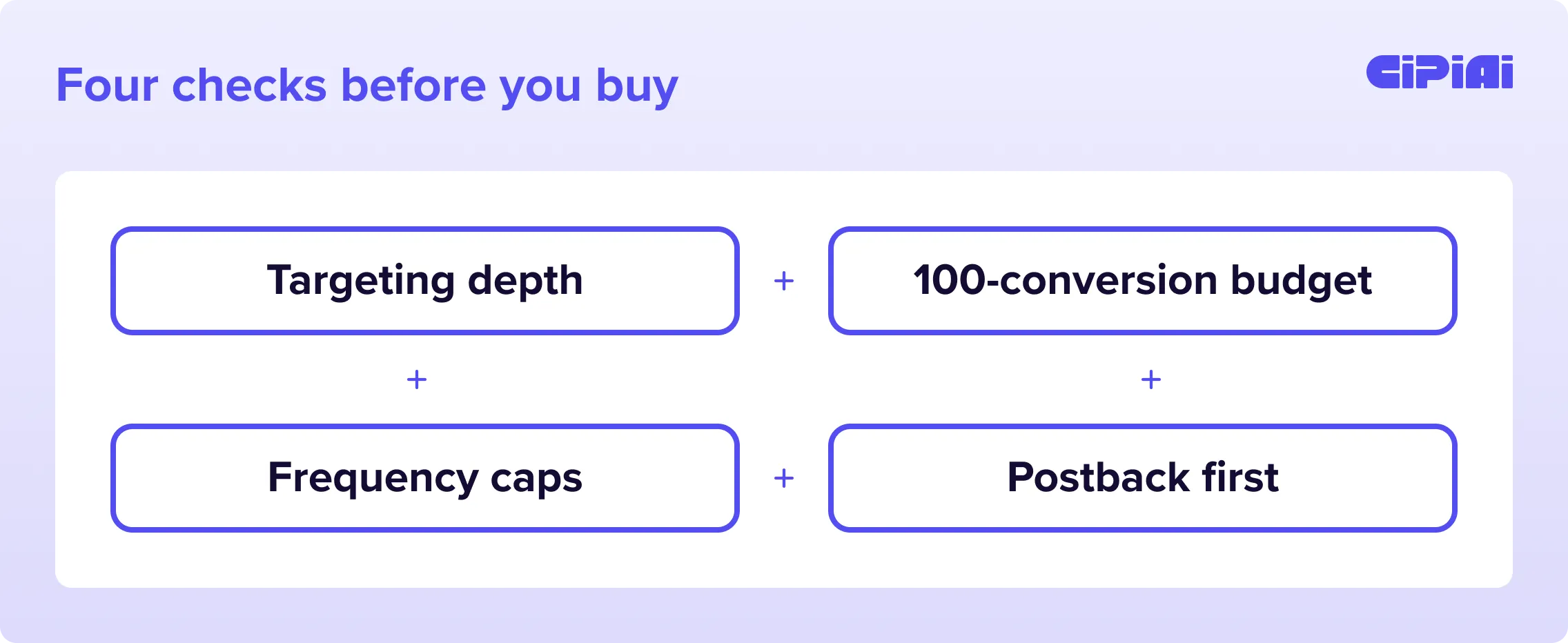
Evaluate a push source on four checks before any real budget: targeting depth, a test budget sized for about 100 conversions, frequency capping, and a working postback. Volume claims on a network's homepage tell you almost nothing about whether that traffic will convert on your offer.
Targeting granularity. Confirm the network lets you filter by GEO, device, OS version, browser and, on classic push, subscription age before you run a cent through it. Subscription age is the single most useful quality lever the format offers: a user who allowed notifications eighteen months ago behaves nothing like one who allowed them last week, and most buyers never segment on it because most networks don't expose it.
Minimum spend for a readable test. A $50 deposit checks whether the interface and postback work. It does not produce a statistically meaningful read on conversion rate. Budget for roughly 100 conversions at your target payout on one GEO before drawing a conclusion. For most tech-vertical offers that lands somewhere between $300 and $800, whatever the deposit floor says. Our guide to testing a CPA offer covers caps and the 48-hour read in detail.
Creative and frequency capping. Push burns creatives faster than almost any paid format, because the same subscriber sees the same message repeatedly. Cap frequency per subscriber from day one and hold at least four or five creative variants ready to rotate in. A CTR that halves within a few days is usually fatigue, not a bad source.
Postback before spend. Verify conversion tracking fires correctly before the first dollar goes out. A campaign that runs three days on broken tracking costs the spend and the wrong conclusion drawn from it, and the second cost is worse than the first.
How much budget do I need to test a push traffic source? Enough for roughly 100 conversions at your target payout on a single GEO, which for most tech offers runs $300–$800. Below that figure you're reading noise regardless of what a network's minimum deposit implies about seriousness.
Which Verticals Convert on Push Traffic
Utilities, VPN, antivirus, cleaners, mobile app installs, dating and sweepstakes are the verticals push networks list on their own vertical pages. The pattern behind that convergence is structural. Push works on offers where the value proposition fits inside a notification headline, the conversion action is small (an install, a one-field signup, a single tap), and the user doesn't need to already be in a buying mood to take it. A notification warning that a connection is exposed can move someone straight to a VPN install; a notification about a considered $400 purchase asks for more than the format can deliver.
Push and mobile-first offers pair well for the same reason: a subscriber reading a notification on a phone is already one tap from an app store or a one-click install page, which shortens the path between the click and the conversion event to almost nothing.
Common Mistakes With Push Campaigns
Six setup mistakes burn most push tests before they produce a usable answer.
Buying "push" without confirming the format. Several networks on "best push" lists now sell in-page push instead of classic subscription push; Adsterra, for one, presents in-page push as its replacement for classic push. Check the advertiser-facing format page, not the marketing copy, before you plan creative or bids around a ceiling that format doesn't have.
Skipping subscription-age targeting where it exists. Most buyers never touch this setting, and it's the cheapest quality control the format offers.
Treating the minimum deposit as a test budget. A $50 floor buys a look at the interface. It doesn't buy a conclusion.
Running several GEOs in week one. A blended result across markets hides which one actually worked and which one dragged the average down.
Not verifying the postback first. Spend that runs against broken tracking teaches nothing and costs the same as spend that runs correctly.
Letting one creative run past its fatigue point. Push wears out faster than most formats because the same subscriber sees the message on repeat; rotate before CTR tells you it's too late.
Where to Send Push Traffic Once You've Tested It
A source that clears the checks above (clean postback, one GEO producing a readable number, subscription age targetable, CTR holding past the first week) is ready for real budget, and real budget needs an offer behind it that actually pays. CIPIAI is a CPA network built for that handoff: direct tech offers in VPN, utilities, antivirus and browser extensions, the same verticals push traffic converts on. Payouts run NET30 with autopayments, threshold from $50 via payment providers and from $500 for wire transfer.
The best push traffic source depends on GEO, budget and whether you need classic subscription push or in-page. RichAds publishes its CPC range, EvaDav and RollerAds expose subscription-age targeting for quality control, and Galaksion and RollerAds publish a $50 minimum deposit for a first test. Compare sources on targeting options and postback support before deposit size.
Is push traffic worth it for CPA campaigns?
Yes, for offers with a low-friction conversion action: VPN, utilities, antivirus, mobile installs. The opt-in click gives push a real, if thin, intent signal that popunder's interrupted attention doesn't carry, which tends to show up as a higher conversion rate per click even though the cost per click usually runs higher too.
How much does push traffic cost?
Push CPC starts at $0.003 per click and reaches $0.34 or more in premium markets on RichAds (checked October 2026). Price tracks GEO, device, format and how contested the zone is, so treat any single published figure as a starting point rather than a quote.
What's the difference between push and popunder traffic?
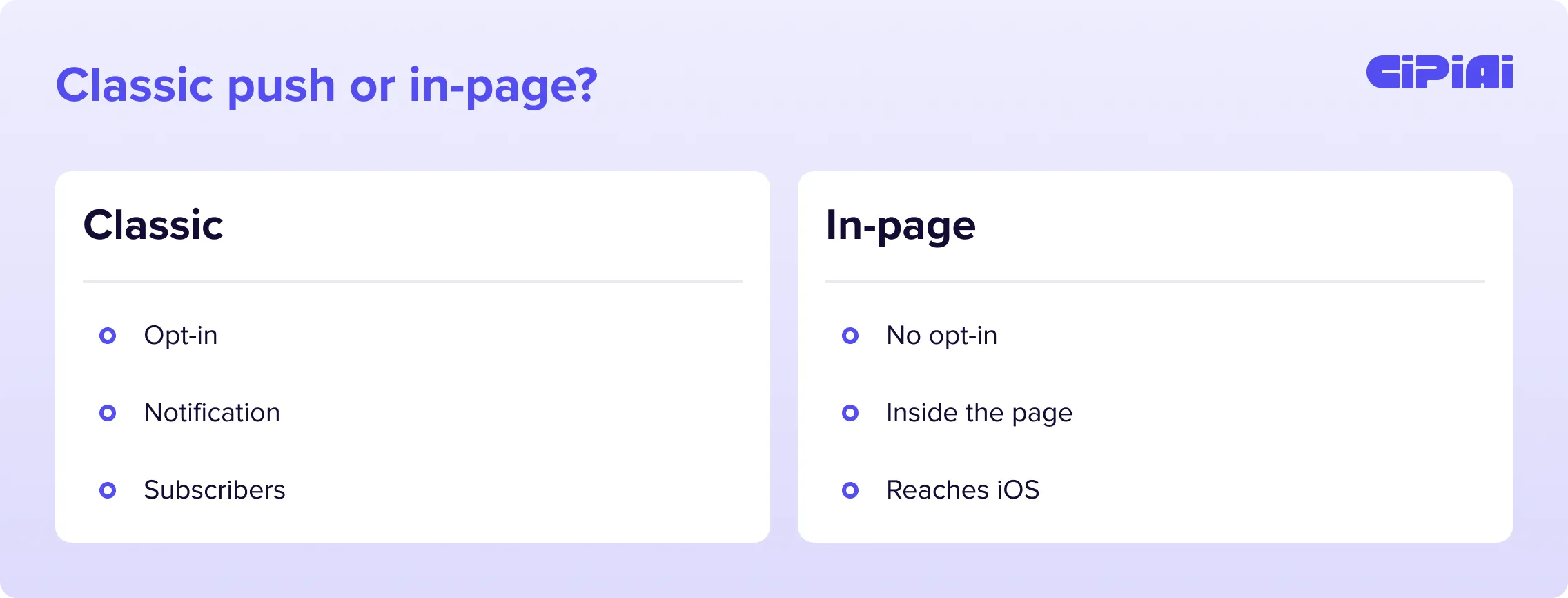
Push requires an opt-in for classic subscription notifications and delivers outside the browsing session; in-page push skips the opt-in and displays inside a webpage styled as a notification. Popunder needs no subscription at all and opens the offer page in a new window under the active tab. Popunder carries more raw volume at a lower floor price; push carries a real, if weak, intent signal from the user's original opt-in.
What are the best push ad networks for beginners?
Galaksion and RollerAds publish a $50 minimum deposit, which makes them a cheap way to test the interface, targeting options and postback before committing a real budget. A low deposit floor checks whether the basics work; it isn't a statistically meaningful test on its own.
How much budget do I need to test a push traffic source?
Roughly enough for 100 conversions at your target payout on one GEO, which for most tech-vertical offers runs $300–$800. Testing multiple GEOs or verticals at once on a new source blends the result and hides which part actually worked.
What's a push notification traffic network?
A push notification traffic network is an ad network that sells advertisers access to a base of users who opted in to receive browser or device notifications from a publisher, then delivers paid messages to that base on a cost-per-click or cost-per-action basis. Some networks that market themselves under this label actually sell in-page push instead of classic subscription push. Confirm which one you're buying before you plan a campaign around it.
How to Start Buying Push Traffic
Start with one source, one GEO and a budget sized for 100 conversions, then scale what reads clean. Push traffic earns its place in a media plan on the strength of one thing: a click the user chose to make. If you're buying push for VPN, utilities, antivirus or browser extension offers and the traffic is already testing clean, the offer side is the easier half. Monetize push traffic with tech CPA offers →