
Crypto Affiliate Marketing: How It Works, Best Programs & Strategy (2026)
How crypto affiliate marketing works, explore top affiliate programs, and discover strategies to earn with crypto offers in 2026.



The crypto market is no longer an emerging niche - it’s a highly competitive user acquisition environment.
Over the past few years, the number of crypto users has grown into the hundreds of millions globally, with exchanges, wallets, and trading platforms competing aggressively for market share. As adoption expands across both retail and institutional segments, the value of each new user continues to increase.
This is driven by one key factor:
👉 crypto users have high lifetime value (LTV)
Unlike traditional verticals, where conversions are often one-time actions, crypto platforms monetize users over time:
A single active trader can generate significantly more revenue than a standard CPA conversion, which allows platforms to invest heavily in acquisition.
At the same time, competition between platforms has intensified.
This creates constant pressure to acquire users efficiently and at scale.
That is where affiliate marketing becomes a core growth channel.
Instead of relying only on traditional advertising, crypto companies increasingly depend on affiliates to:
👉 In practice, affiliates are not just a traffic source - they are a primary acquisition layer in the crypto ecosystem.
And this is exactly why searches like best crypto affiliate programs continue to grow.
Not all programs are equal.
The difference between a profitable and unprofitable setup often comes down to:
Choosing the right crypto affiliate program is not just about commissions - it’s about building a system that can scale.
Not all crypto affiliate programs are built the same.
Two offers may look similar on the surface - but differ significantly in profitability depending on how they handle payouts, traffic, and user validation.
To make a rational decision, affiliates should evaluate programs across four key dimensions:
The payout model defines how and when you earn - and directly impacts your cash flow and long-term profitability.
CPA (Cost Per Acquisition)
You receive a fixed payout when a user completes a defined action (e.g., registration + deposit).
In crypto, CPA payouts often range from $10 to $200+ depending on deposit requirements and GEO
Revenue Share (RevShare)
You earn a percentage of the revenue generated by your referred users (typically trading fees).
This model compounds over time as users continue trading
Hybrid Model
A combination of CPA + RevShare.
👉 In practice:
Crypto affiliate performance is heavily influenced by geography.
Key factors:
Typical patterns:
👉 A strong program offers clear GEO targeting + localized funnels
This is where most affiliates lose money.
Programs differ in how complex their funnel is:
Simple flows
Complex flows
👉 Example:
The key is matching:
your traffic quality → funnel complexity
Crypto is a regulated vertical - ignoring this is a mistake.
Important factors:
Programs with stricter compliance:
👉 But they also require:
👉 The key takeaway:
Choosing a crypto affiliate program is not about highest payout on paper.
It’s about:
Affiliates who understand this layer consistently outperform those who chase headline commissions.
Unlike standalone affiliate programs, CIPIAI operates as a performance-based affiliate network - meaning affiliates are not limited to a single platform or payout model.
Instead, they get access to a portfolio of crypto offers, including:
The key difference is structure.
CIPIAI focuses on:
👉 In practice, this allows affiliates to test multiple monetization models within one infrastructure - instead of being locked into a single program.
Cryptoguru is a mobile-first crypto app designed as a trading simulator, making it highly accessible for a broad audience.
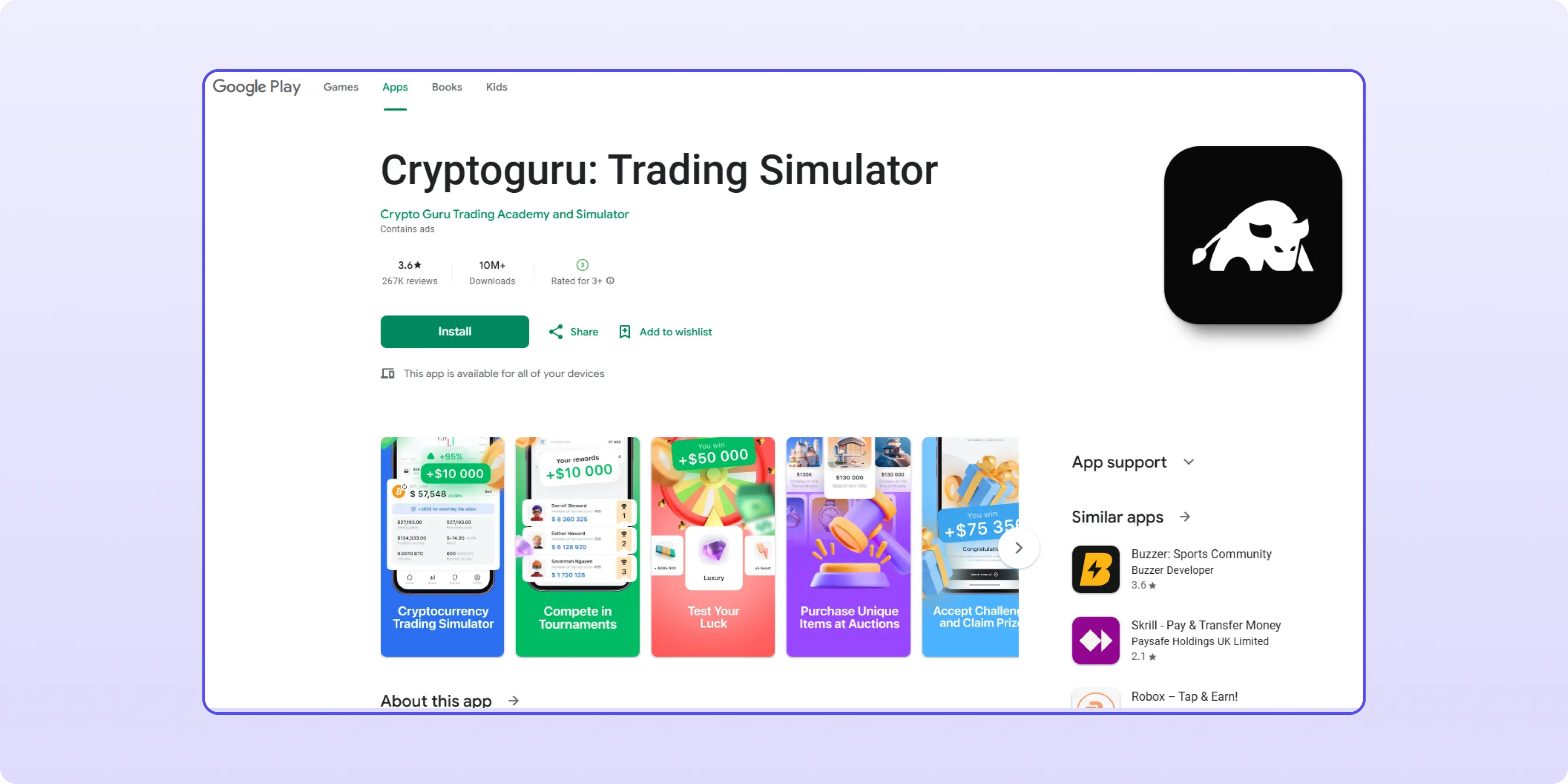
Core model:
Key details:
Conversion flow:
User installs → engages with app → generates in-app revenue → affiliate earns
Why it works:
👉 This makes it particularly effective for:
Immutable EVEX represents the opposite end of the spectrum - a high-ticket crypto trading platform focused on qualified users.
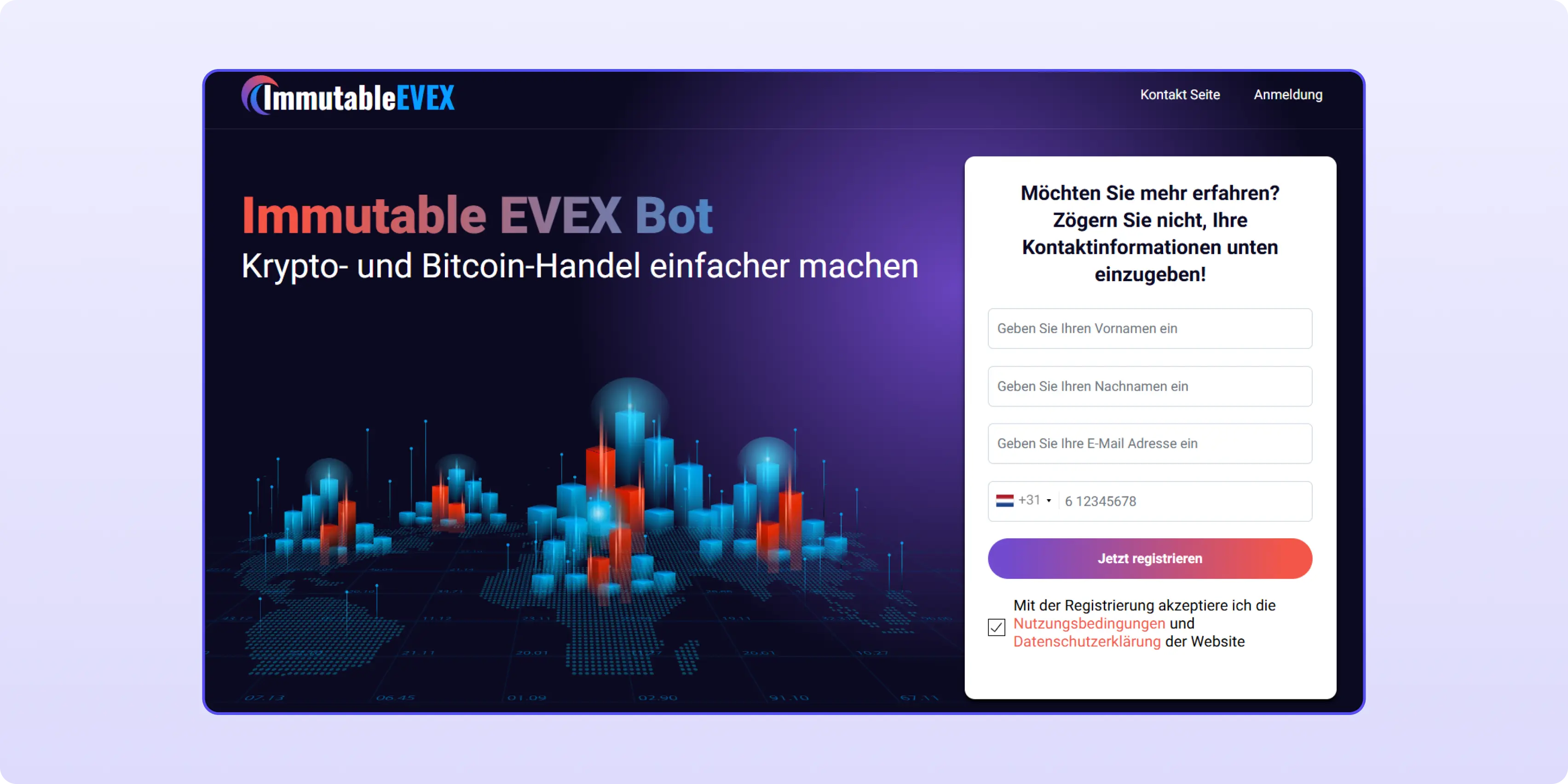
Core model:
Key details:
Conversion flow:
Ad → Prelander → Registration → Call center → Deposit
Important characteristics:
👉 This is a high-value but high-complexity funnel, where:
These two offers illustrate a critical point:
👉 crypto affiliate marketing is not one model - it’s a spectrum
CIPIAI allows affiliates to operate across both ends:
Additional crypto offers are available upon request through your affiliate manager.
👉 This matters for:
In other words, you’re not choosing a single program - you’re plugging into an expandable performance system.

Binance operates one of the largest and most established crypto affiliate programs in the market, backed by its position as a global exchange leader.
Core model:
Key characteristics:
How it works:
User registers → starts trading → affiliate earns a percentage of fees
Strengths:
Limitations:
👉 Best suited for:
Also read
Bybit is a trading-focused platform known for derivatives and active trader audiences, making its affiliate program highly performance-driven.
Core model:
Key characteristics:
How it works:
User registers → trades (spot/futures) → affiliate earns recurring commissions
Strengths:
Limitations:
👉 Best suited for:
OKX offers a flexible affiliate system combining strong RevShare mechanics with performance tools and global reach.
Core model:
Key characteristics:
How it works:
User signs up → trades over time → affiliate earns ongoing revenue
Strengths:
Limitations:
👉 Best suited for:
Beyond the major exchanges, the crypto affiliate ecosystem includes a wide range of additional programs:
👉 Key takeaway:
Most standalone crypto affiliate programs follow a similar pattern:
This is exactly where networks like CIPIAI differ - by offering:
Which becomes critical when moving from content monetization → scalable performance campaigns.
There is no single “best” crypto affiliate program - only the one that fits your traffic, GEO, and experience level.
The same offer can perform completely differently depending on how it’s used.
👉 The key is alignment: traffic → funnel → payout model
Your traffic source is the first filter when choosing a program.
SEO / Content Traffic → Exchanges (RevShare)
👉 Best fit:
Paid Traffic → CPA / Hybrid Offers
👉 Best fit:
Push / Pop / In-App Traffic → CPI Models
👉 Best fit:
Geography directly affects both conversion and compliance.
EU / Tier 1 Markets → Regulated Programs
👉 Typical setup:
Tier 2 / Tier 3 Markets → Flexible Acquisition
👉 Typical setup:
Your level of experience determines how complex a funnel you can handle.
Beginner → CPI / Simple Flows
👉 Example:
Intermediate → CPA / Hybrid
👉 Example:
Advanced → FTD / High-Ticket Offers
👉 Example:
Choosing the right crypto affiliate program is not about brand names -
it’s about matching complexity with capability.
👉 Simple rule:
Affiliates who understand this mapping consistently outperform those who choose programs based only on commission size.
Crypto affiliate marketing offers strong earning potential - but it is also one of the most regulated and compliance-sensitive verticals.
Ignoring this layer is one of the fastest ways to lose accounts, traffic sources, or payouts.
Crypto operates under different legal frameworks depending on the region.
👉 This affects:
Affiliates must always align campaigns with local financial and advertising laws.
Most high-value crypto offers require identity verification.
This includes:
👉 Impact on performance:
High-ticket offers - especially FTD (first-time deposit) - depend heavily on KYC completion.
Major ad platforms impose strict rules on crypto-related campaigns.
👉 As a result:
The Immutable EVEX offer is a clear example of how compliance shapes performance.
👉 What this means in practice:
At the same time:
👉 payouts can reach up to $960 per qualified user
This highlights a core principle:
the stricter the compliance, the higher the potential value - but the lower the tolerance for low-quality traffic
Compliance is not a limitation - it is part of the model.
Affiliates who:
consistently achieve more stable and scalable results than those trying to bypass restrictions.
Crypto affiliate marketing remains one of the highest-potential verticals in performance marketing.
At the same time, there is no universal “best” approach.
Different programs operate on different models:
👉 The key is choosing the right combination of:
Affiliates who align these elements build systems that scale - not just campaigns that convert once.
Ready to scale your crypto campaigns? Register on CIPIAI and get access to crypto CPA and CPI offers.
The best crypto affiliate programs depend on your traffic and strategy.
At the same time, many affiliates choose to work with affiliate networks like CIPIAI, which provide access to multiple crypto offers across different models (CPI, CPA, RevShare) within a single platform.
Earnings vary based on the model:
👉 Long-term earnings depend on user activity, not just initial conversion.
For beginners, CPI and simple CPA models are the easiest to start with.
More advanced models like FTD require:
Yes, but it depends on the GEO and local regulations.
Affiliates must follow:
👉 Ignoring compliance can lead to account bans or rejected payouts.
It depends on the model:
👉 Matching traffic type with the right offer is critical for profitability.
High payouts usually come with higher requirements.
For example:
👉 These steps reduce conversion rate but increase user value - which allows advertisers to pay more.
👉 CPA = faster returns
👉 RevShare = long-term income
Many programs offer hybrid models combining both.
For high-value offers - yes.
👉 Low-quality or incentivized traffic typically does not work for these funnels.


Bisdev Solutions Limited
Room 701, 7/F, Lucky Centre, 165-171
Wanchai Road, Wan Chai, Hong Kong China
Copyright © 2026. Bisdev Solutions Limited
All rights reserved