Affiliate Pulse: AI Tools, Meta Ads Scaling & Buyer-Intent Traffic
AI tools, Meta Ads scaling strategies, buyer-intent traffic and new affiliate marketing tactics. This week’s Affiliate Pulse breaks down the most important industry signals.


If you zoom out for a second - the signal this week is actually very clean. Not because something “new” happened.
But because the same pattern keeps repeating across different platforms.
👉 Traffic is getting easier to generate
👉 Monetization is getting harder to stabilize
👉 And the gap between those two is growing
You see it on YouTube. You see it on Reddit. You see it on X.
More people are entering affiliate marketing - but fewer people understand how to turn it into a system. And that’s where things start to break.
A creator runs a 7-day Pinterest challenge.
They do everything “right”:
Traffic starts coming in.
But conversions? Almost nothing.
Why? Because traffic ≠ intent. Pinterest delivers discovery-mode users. They’re browsing. Not buying. The offer needs to meet them where they are. And most setups don’t.
Traffic is the easy part. The hard part is the conversion layer:
Pinterest traffic can be profitable — but only when matched with the right offer and funnel structure.
“Blogger → review → commission”
That’s the classic model. And it still gets millions of views. Because it’s simple. But simple isn’t the same as scalable.
The content creates a false expectation that:
In reality, each step requires its own optimization layer.
The no-website model is gaining traction. Platforms like Stan Store, Linktree, and social bios are being used as mini-funnels. This is actually interesting — because it’s solving a real problem: removing the technical barrier to entry. But it creates a new problem: dependency on platforms you don’t control.
Infrastructure matters. It’s just that simple infrastructure is better than no infrastructure.
Also read
A creator uses AI to build a faceless YouTube channel from scratch in 24 hours. The result?
~$524 total revenue.
Demonetization due to reused content.
This is where things get interesting. Because the problem isn’t AI. It’s dependency.
If your entire monetization model depends on:
Then your revenue is not under your control. And platforms are evolving fast. They’re moving away from:
👉 volume
👉 automation
👉 repeatable formats
And toward:
👉 originality
👉 engagement
👉 real user value
Because if not - you’re building something fragile.
Platforms promising “$500/day” from day one. No experience. No audience. No testing. These exist. And they get clicks. Because the promise is emotionally compelling.
But here’s what’s missing from the narrative: Every platform that generates revenue reliably is built on:
Speed shortcuts those steps. And shortcuts usually have a cost.

Reddit is where the real conversations happen. And this week, there’s a clear pattern: People are questioning the fundamentals.
The posts that get the most engagement are:
This isn’t new. But it reflects a pattern: Guides teach traffic. Not systems.

The pattern repeats: Traffic ≠ conversions. And without understanding why, affiliates keep optimizing the wrong thing.

On X, performance marketers are sharing real data. Including: what’s no longer working. Meta CPCs are rising. Conversion rates are dropping. ROI is harder to maintain.
This matters because: Most beginner content pretends this doesn’t exist.

It may seem unrelated. But the logic applies directly: Markets follow behavior. And affiliate performance is always downstream of demand.
At the same time, success posts are everywhere:
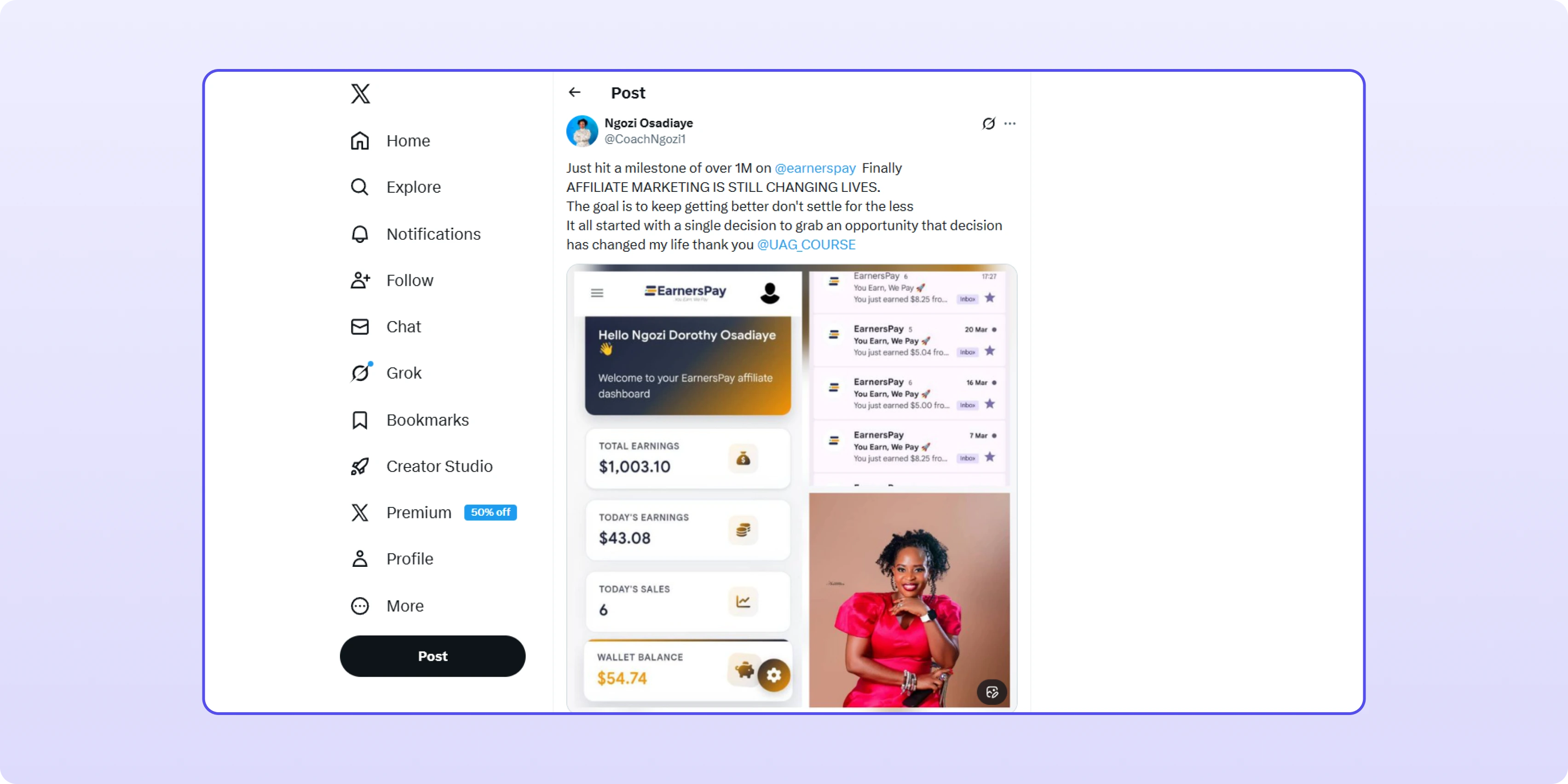
Milestones. Screenshots. Revenue claims. But here’s the important nuance. Not all growth is equal.
When you see numbers like this, it’s worth asking:
Taken together, these signals show a clear direction:
👉 more accountability
👉 more performance-based thinking
👉 less tolerance for inefficiency
Affiliate marketing is slowly aligning with:
And that shift changes the game.
Because the more the market matures - the less space there is for randomness.
Ready to build a system that actually scales? Register on CIPIAI or browse available offers.


Bisdev Solutions Limited
Room 701, 7/F, Lucky Centre, 165-171
Wanchai Road, Wan Chai, Hong Kong China
Copyright © 2026. Bisdev Solutions Limited
All rights reserved